
Introduction
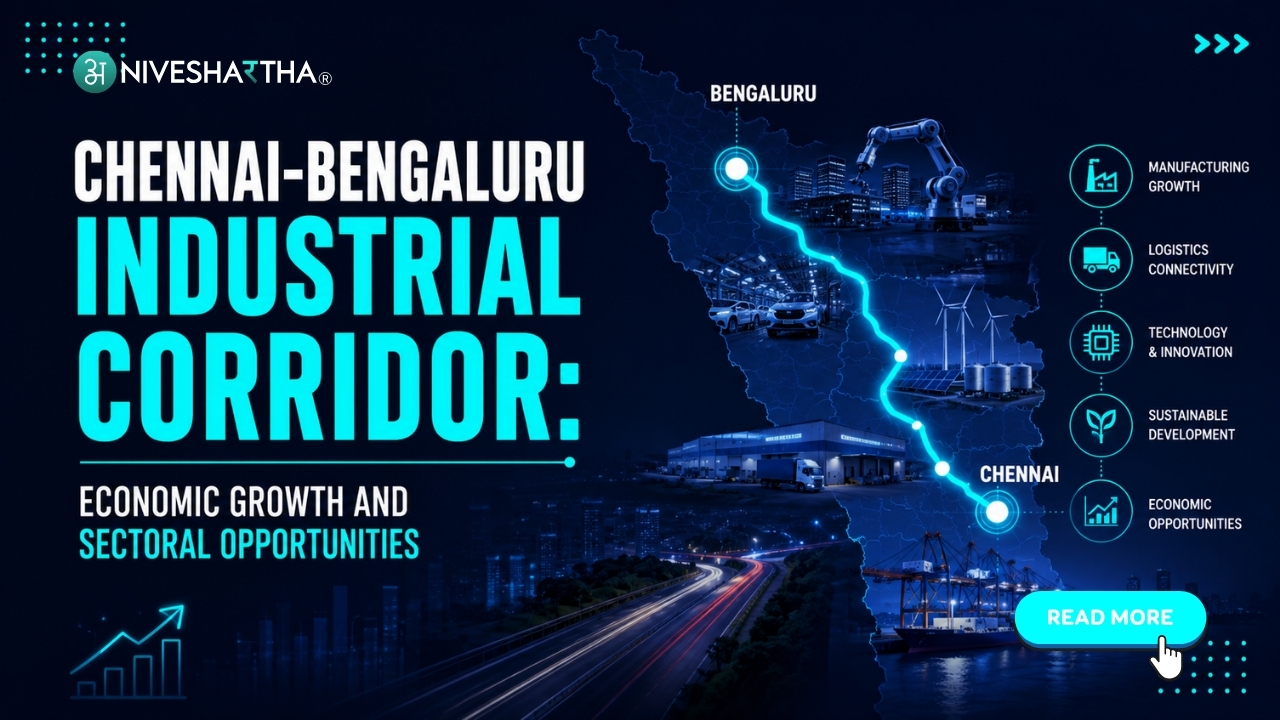
India's economic growth is closely linked to the development of modern infrastructure. Over the past decade, industrial corridors have emerged as one of the country's most significant initiatives to strengthen manufacturing, improve logistics, and create employment opportunities. Among these, the Chennai-Bengaluru Industrial Corridor (CBIC) stands out as a major project connecting two of South India's most important economic centers.
Stretching across Tamil Nadu, Karnataka, and parts of Andhra Pradesh, the Chennai-Bengaluru Industrial Corridor is designed to enhance industrial productivity, improve connectivity, and support India's vision of becoming a global manufacturing hub.
What is the Chennai-Bengaluru Industrial Corridor?
The Chennai-Bengaluru Industrial Corridor (CBIC) is a large-scale infrastructure and industrial development project aimed at improving transportation, logistics, and industrial ecosystems between Chennai and Bengaluru.
The corridor integrates:
- Industrial parks
- Manufacturing clusters
- Smart cities
- Logistics hubs
- Freight connectivity
- Urban infrastructure
By improving connectivity between these regions, CBIC helps businesses transport goods more efficiently while reducing logistics costs.
Why is the Corridor Important?
Efficient transportation plays a critical role in economic development. Industries rely on seamless movement of raw materials, finished products, and skilled workforce.
The Chennai-Bengaluru Industrial Corridor focuses on:
- Improving road connectivity
- Enhancing industrial infrastructure
- Supporting exports
- Encouraging private investments
- Strengthening regional manufacturing ecosystems
These improvements contribute to higher productivity and increased industrial competitiveness.
Key States Benefiting from CBIC
Tamil Nadu
Tamil Nadu has long been recognized as one of India's leading manufacturing states.
Industries such as:
- Automobile manufacturing
- Auto components
- Electronics
- Textiles
- Heavy engineering
benefit significantly from better logistics and industrial infrastructure.
Cities including Chennai, Hosur, Krishnagiri, Salem, and Coimbatore are expected to experience continued industrial expansion.
Karnataka
Karnataka contributes through both manufacturing and technology-driven industries.
Bengaluru serves as:
- India's leading IT hub
- A growing electronics manufacturing center
- A startup ecosystem
- Aerospace and defence manufacturing hub
Improved connectivity with Tamil Nadu supports supply chains across multiple industries.
Andhra Pradesh
Parts of Andhra Pradesh also gain from enhanced industrial connectivity through logistics, warehousing, food processing, and manufacturing activities.
Industries That Could Benefit
The Chennai-Bengaluru Industrial Corridor supports multiple sectors rather than focusing on a single industry.
Some major sectors include:
Automobile Manufacturing
The region already hosts several automobile manufacturers and component suppliers. Improved logistics can help increase operational efficiency.
Electronics Manufacturing
India's growing focus on electronics production aligns well with the industrial ecosystem created through CBIC.
Aerospace and Defence
Southern India has become an important location for aerospace manufacturing, with Bengaluru playing a significant role.
Logistics and Warehousing
Better highways and industrial connectivity encourage the development of:
- Warehousing
- Cold storage
- Distribution centers
- Supply chain services
MSMEs
Small and Medium Enterprises often benefit from improved infrastructure by gaining better market access and supply chain connectivity.
Employment and Skill Development
Industrial development often creates employment opportunities beyond manufacturing.
Growth in industrial ecosystems supports:
- Engineering jobs
- Construction
- Transportation
- Logistics
- Information Technology
- Maintenance services
- Retail
- Hospitality
Skill development institutions also play an important role in preparing the workforce for evolving industrial requirements.
Impact on Regional Economic Growth
One of the key advantages of industrial corridors is balanced regional development.
Instead of concentrating industries in one city, CBIC encourages development across multiple districts.
This leads to:
- Better urban planning
- Increased industrial investments
- Higher economic activity
- Infrastructure development
- Improved business environment
Regional industries become more competitive while local economies gain new opportunities.
Infrastructure as a Growth Driver
Infrastructure remains one of the strongest foundations of long-term economic development.
Projects like the Chennai-Bengaluru Industrial Corridor improve:
- Highway connectivity
- Industrial parks
- Power infrastructure
- Water management
- Logistics efficiency
- Urban services
These improvements make the region more attractive for both domestic and international businesses.
Future Outlook
India continues to focus on strengthening its manufacturing capabilities through initiatives that improve ease of doing business and industrial infrastructure.
The Chennai-Bengaluru Industrial Corridor represents one such long-term initiative that can contribute to:
- Manufacturing expansion
- Export competitiveness
- Infrastructure modernization
- Regional economic development
- Employment generation
As industries continue to expand across South India, integrated infrastructure projects like CBIC are expected to play an increasingly important role in supporting sustainable economic growth.
Conclusion
The Chennai-Bengaluru Industrial Corridor (CBIC) represents a significant step in strengthening South India's industrial and economic landscape. By improving infrastructure, enhancing connectivity, and supporting key sectors such as manufacturing, logistics, electronics, and technology, the corridor contributes to regional development while reinforcing India's long-term economic ambitions.
For investors, business professionals, and individuals interested in understanding India's evolving economy, staying informed about infrastructure projects like CBIC provides valuable context on how regional development influences industries and the broader business environment.
At NiveshArtha, we believe that informed decisions begin with understanding the factors that shape the economy. Through research-driven articles and educational insights, we aim to help readers stay updated on economic trends, industry developments, and market-related topics that contribute to a deeper understanding of India's growth story.
Niveshartha
July 4, 2026
Get in touch with us
Start investing today, for a better tomorrow
If you’d like to talk to our executive kindly call us on +91 8884014014 during 9 am - 5 pm weekdays.
Start investing today, for a better tomorrow
If you’d like to talk to our executive kindly call us on +91 8884014014 during 9 am - 5 pm weekdays.





*Disclaimer: “Registration granted by SEBI, Enlistment as RA with Exchange and certification from NISM in no way guarantee performance of the intermediary or provide any assurance of returns to investors.”
*Disclaimer: For security/securities displayed in the website and in the advertisement - “The securities quoted (If any) on our website or in any of our advertisement are for illustration only and are not recommendatory.”
*Standard warning: “Investment in securities market are subject to market risks. Read all the related documents carefully before investing.”
*Mandatory notice: “Clients shall be requested to go through Do’s and Don’ts while dealing with RA as specified in SEBI master circular no. SEBI/HO/MIRSD-POD- 1/P/CIR/2024/49 dated May 21, 2024 or as may be specified by SEBI from time to time.”
Note: We have changed our pricing with effective from 01/12/2024.
Niveshartha ©2026 All Rights Reserved.
Developed by Techisor