
Introduction
Investing in stock is not just about analyzing financial statements, revenue growth, or market trends.
One of the most overlooked factors that significantly influences a company's long-term success is corporate governance.
Strong corporate governance creates transparency, accountability, and ethical business practices, which help build investor confidence and support sustainable business growth.
Companies with effective governance frameworks are often better equipped to manage risks, attract investments, and deliver consistent value to shareholders over time.
What is Corporate Governance?
Corporate governance refers to the system of rules, policies, processes, and practices that guide how a company is managed and controlled.
It establishes the relationship between a company's management, board of directors, shareholders, and other stakeholders.
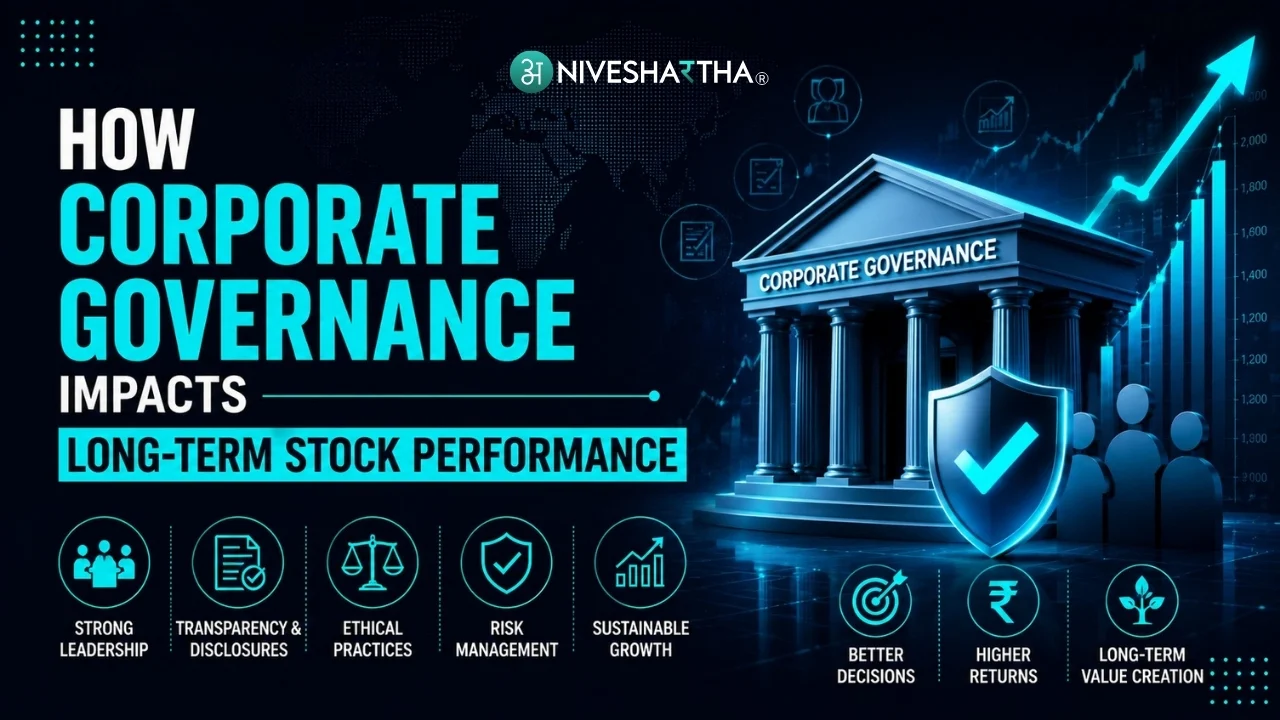
The primary objectives of corporate governance include:
- Ensuring transparency in financial reporting
- Protecting shareholder interests
- Promoting ethical business practices
- Strengthening accountability within management
- Supporting long-term sustainable growth
A well-governed company is generally viewed as more reliable and trustworthy by investors.
Why Corporate Governance Matters to Investors
Corporate governance directly affects how a company makes strategic decisions and manages shareholder capital.
Investors are more likely to invest in companies that maintain high governance standards because these businesses are perceived to have lower operational and financial risks.
Strong governance helps investors by:
- Increasing confidence in management decisions
- Improving financial transparency
- Reducing the likelihood of fraud or corporate misconduct
- Enhancing long-term business stability
- Supporting consistent shareholder value creation
Good governance allows investors to make informed decisions based on accurate and reliable information.
Key Elements of Strong Corporate Governance
1. Independent Board of Directors
An independent board plays a critical role in overseeing management decisions and ensuring that business strategies align with shareholder interests.
An effective board should:
- Include independent directors
- Maintain transparency in decision-making
- Monitor executive performance
- Protect minority shareholder rights
2. Financial Transparency
Transparent financial reporting enables investors to evaluate a company's actual financial health.
Companies with strong governance:
- Publish timely financial reports
- Follow accounting standards
- Clearly disclose risks
- Maintain transparent communication with shareholders
This reduces uncertainty and improves investor confidence.
3. Ethical Leadership
Management's commitment to ethical business practices is an essential aspect of corporate governance.
Ethical leadership involves:
- Compliance with laws and regulations
- Fair treatment of stakeholders
- Responsible business conduct
- Zero tolerance for fraudulent activities
Ethical companies often enjoy stronger brand reputation and investor trust.
4. Risk Management
Strong governance frameworks ensure that companies identify and manage business risks effectively.
Effective risk management includes:
- Internal control systems
- Compliance monitoring
- Cybersecurity policies
- Operational risk assessments
- Financial risk management
Companies with structured risk management are generally more resilient during economic uncertainty.
How Good Corporate Governance Improves Long-Term Stock Performance
Builds Investor Confidence
Institutional investors and long-term shareholders prefer companies that demonstrate transparency, accountability, and responsible management.
Higher investor confidence often contributes to stable shareholder participation over time.
Improves Capital Allocation
Companies with sound governance are more likely to allocate capital efficiently.
This includes:
- Investing in profitable projects
- Maintaining financial discipline
- Managing debt responsibly
- Returning value to shareholders through appropriate capital allocation policies
Efficient capital allocation supports sustainable business growth.
Reduces Business Risk
Poor governance can expose companies to:
- Accounting irregularities
- Regulatory penalties
- Legal disputes
- Management conflicts
- Loss of investor confidence
Strong governance minimizes these risks and helps protect shareholder value.
Supports Sustainable Growth
Companies with effective governance generally focus on long-term business objectives rather than short-term market expectations.
They are more likely to:
- Invest in innovation
- Develop long-term business strategies
- Improve operational efficiency
- Build stronger customer relationships
This contributes to consistent long-term performance.
Warning Signs of Weak Corporate Governance
Before making an investment decision, investors should watch for governance-related concerns such as:
- Lack of transparency in financial reporting
- Frequent management conflicts
- Unexplained related-party transactions
- Regulatory violations
- Frequent changes in senior leadership
- Poor communication with shareholders
Conclusion
Corporate governance plays an important role in determining a company's long-term success and stock performance.
Strong governance practices create transparency, accountability, and trust, helping companies manage risks and create sustainable shareholder value.
Investors should evaluate governance alongside financial performance, business quality, valuation, and growth potential before making investment decisions.
At NiveshArtha, we believe that understanding corporate governance is an essential part of research-driven investing.
By analyzing governance standards along with comprehensive financial research, investors can identify quality businesses and make more confident long-term investment decisions.
Niveshartha
July 20, 2026
Get in touch with us
Recent Posts
Start investing today, for a better tomorrow
If you’d like to talk to our executive kindly call us on +91 8884014014 during 9 am - 5 pm weekdays.
Start investing today, for a better tomorrow
If you’d like to talk to our executive kindly call us on +91 8884014014 during 9 am - 5 pm weekdays.





*Disclaimer: “Registration granted by SEBI, Enlistment as RA with Exchange and certification from NISM in no way guarantee performance of the intermediary or provide any assurance of returns to investors.”
*Disclaimer: For security/securities displayed in the website and in the advertisement - “The securities quoted (If any) on our website or in any of our advertisement are for illustration only and are not recommendatory.”
*Standard warning: “Investment in securities market are subject to market risks. Read all the related documents carefully before investing.”
*Mandatory notice: “Clients shall be requested to go through Do’s and Don’ts while dealing with RA as specified in SEBI master circular no. SEBI/HO/MIRSD-POD- 1/P/CIR/2024/49 dated May 21, 2024 or as may be specified by SEBI from time to time.”
Note: We have changed our pricing with effective from 01/12/2024.
Niveshartha ©2026 All Rights Reserved.
Developed by Techisor