
Introduction
When searching for Investing In Stocks, finding companies with strong financial performance is only part of the equation. The real challenge is identifying businesses that can continue outperforming competitors for years or even decades.
These companies possess what investors call a sustainable competitive advantage—a unique strength that allows them to protect their market position, generate consistent profits, and deliver long-term value to shareholders.
Understanding how to recognize these businesses can help investors build a stronger and more resilient investment portfolio.
What Is a Sustainable Competitive Advantage?
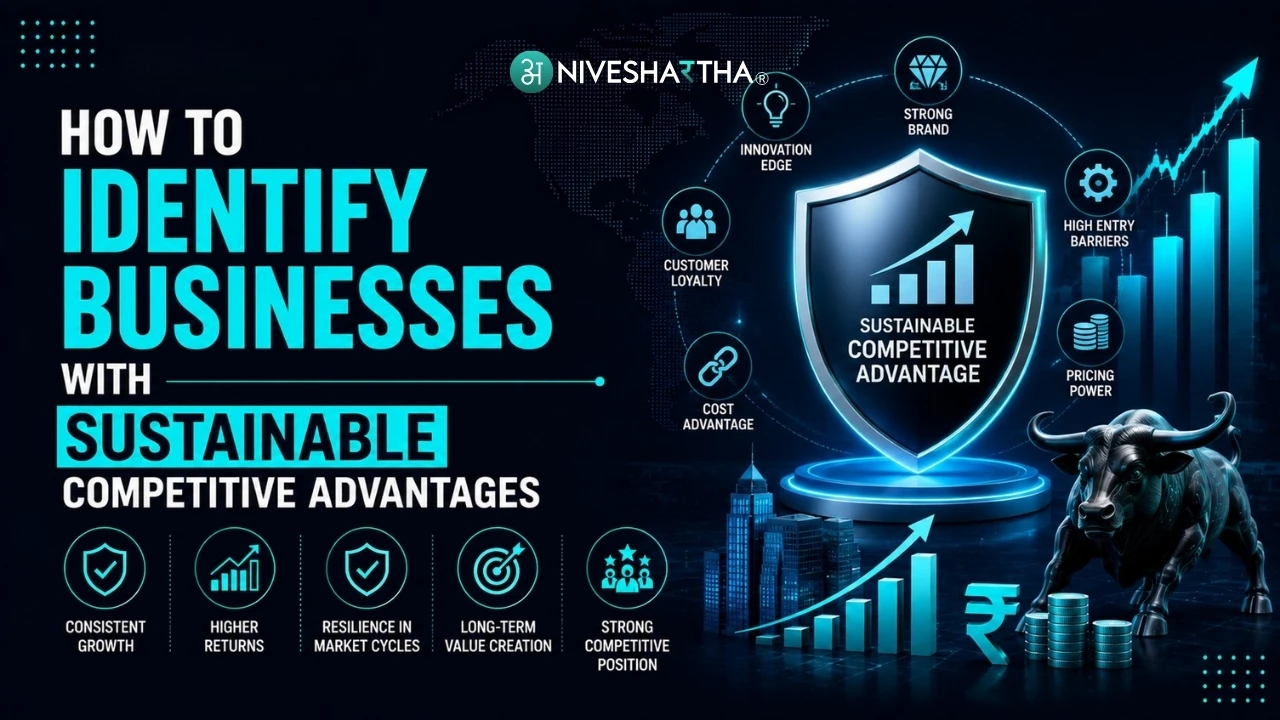
A sustainable competitive advantage is a unique characteristic or capability that enables a company to maintain its leadership position despite competition. It acts as a protective barrier, making it difficult for competitors to replicate the company's success.
Businesses with sustainable competitive advantages often enjoy:
- Strong customer loyalty
- Consistent revenue growth
- Higher profitability
- Better pricing power
- Long-term business stability
These qualities make them attractive for long-term investors.
Why Competitive Advantages Matter
Markets are constantly evolving, and new competitors emerge every year. Companies without a competitive edge may struggle to maintain profitability as competition increases.
Businesses with durable advantages can:
- Protect market share
- Maintain healthy profit margins
- Adapt to changing market conditions
- Generate consistent cash flows
- Create long-term shareholder value
For investors, these characteristics often translate into lower business risk and more predictable growth.
Types of Sustainable Competitive Advantages
1. Strong Brand Recognition
Well-established brands earn customer trust over many years. Consumers often prefer familiar brands even when alternatives are available.
Examples include companies known for:
- High product quality
- Customer trust
- Consistent user experience
- Strong market reputation
A powerful brand creates customer loyalty that competitors find difficult to break.
2. Cost Leadership
Some companies produce goods or services at significantly lower costs than competitors.
Lower operating costs allow businesses to:
- Offer competitive pricing
- Maintain higher profit margins
- Survive economic downturns more effectively
Efficient operations become a major competitive advantage.
3. Network Effects
Certain businesses become more valuable as more users join their platform.
Examples include:
- Digital payment platforms
- Social media networks
- Online marketplaces
As user participation increases, competitors face greater difficulty attracting customers.
4. High Switching Costs
Some businesses make it costly or inconvenient for customers to switch to competitors.
Switching costs may involve:
- Time
- Training
- Software migration
- Business disruption
This helps companies retain customers for extended periods.
5. Intellectual Property
Patents, trademarks, copyrights, and proprietary technology provide legal protection against competitors.
Innovation-driven businesses often benefit from:
- Exclusive products
- Advanced technologies
- Unique manufacturing processes
These advantages support long-term growth.
Financial Indicators of Competitive Strength
Investors should also evaluate financial performance to confirm whether a competitive advantage is reflected in business results.
Look for companies with:
Consistent Revenue Growth
Steady sales growth over several years indicates healthy customer demand and business expansion.
Strong Profit Margins
Companies with sustainable advantages often maintain higher operating and net profit margins than competitors.
Healthy Return on Equity (ROE)
A consistently high ROE suggests efficient use of shareholder capital and strong business performance.
Positive Cash Flow
Strong operating cash flow demonstrates that the company generates real cash from its core business activities.
Low Debt Levels
Financially disciplined companies are generally better positioned to navigate economic uncertainty.
Evaluate Management Quality
Even businesses with strong competitive advantages require capable leadership.
Investors should assess management based on:
- Capital allocation decisions
- Corporate governance practices
- Transparency in communication
- Long-term strategic planning
- Consistent execution of business objectives
Strong management often strengthens an existing competitive advantage.
Watch for Industry Trends
Competitive advantages can change over time.
Investors should monitor:
- Technological disruption
- Consumer behavior changes
- Regulatory developments
- Emerging competitors
- Market expansion opportunities
Companies that continuously innovate are more likely to maintain their leadership position.
Common Mistakes Investors Should Avoid
Many investors assume that current market leaders will always remain dominant. However, industries evolve rapidly.
Avoid relying solely on:
- Past stock price performance
- Short-term earnings growth
- Market popularity
- Temporary industry trends
Instead, evaluate whether the company's competitive advantage remains durable and difficult for competitors to replicate.
Building a Long-Term Investment Strategy
Companies with sustainable competitive advantages often become long-term wealth creators because they continue generating consistent earnings and adapting to changing market conditions.
While no business is immune to challenges, firms with strong competitive positions are generally better equipped to withstand economic cycles and industry disruptions.
Combining competitive advantage analysis with financial fundamentals, valuation, and management quality helps investors make more informed decisions.
Conclusion
Successful Investing In Stocks involves looking beyond short-term financial results to identify businesses with lasting competitive strengths.
Companies with strong brands, cost leadership, network effects, intellectual property, and efficient management are often better positioned for long-term success.
At NiveshArtha, we believe that identifying businesses with sustainable competitive advantages is an essential part of research-driven investing.
By combining fundamental analysis with a long-term perspective, investors can build portfolios focused on quality businesses that have the potential to create lasting value.
Niveshartha
August 01, 2026
Get in touch with us
Recent Posts
Start investing today, for a better tomorrow
If you’d like to talk to our executive kindly call us on +91 8884014014 during 9 am - 5 pm weekdays.
Start investing today, for a better tomorrow
If you’d like to talk to our executive kindly call us on +91 8884014014 during 9 am - 5 pm weekdays.





*Disclaimer: “Registration granted by SEBI, Enlistment as RA with Exchange and certification from NISM in no way guarantee performance of the intermediary or provide any assurance of returns to investors.”
*Disclaimer: For security/securities displayed in the website and in the advertisement - “The securities quoted (If any) on our website or in any of our advertisement are for illustration only and are not recommendatory.”
*Standard warning: “Investment in securities market are subject to market risks. Read all the related documents carefully before investing.”
*Mandatory notice: “Clients shall be requested to go through Do’s and Don’ts while dealing with RA as specified in SEBI master circular no. SEBI/HO/MIRSD-POD- 1/P/CIR/2024/49 dated May 21, 2024 or as may be specified by SEBI from time to time.”
Note: We have changed our pricing with effective from 01/12/2024.
Niveshartha ©2026 All Rights Reserved.
Developed by Techisor